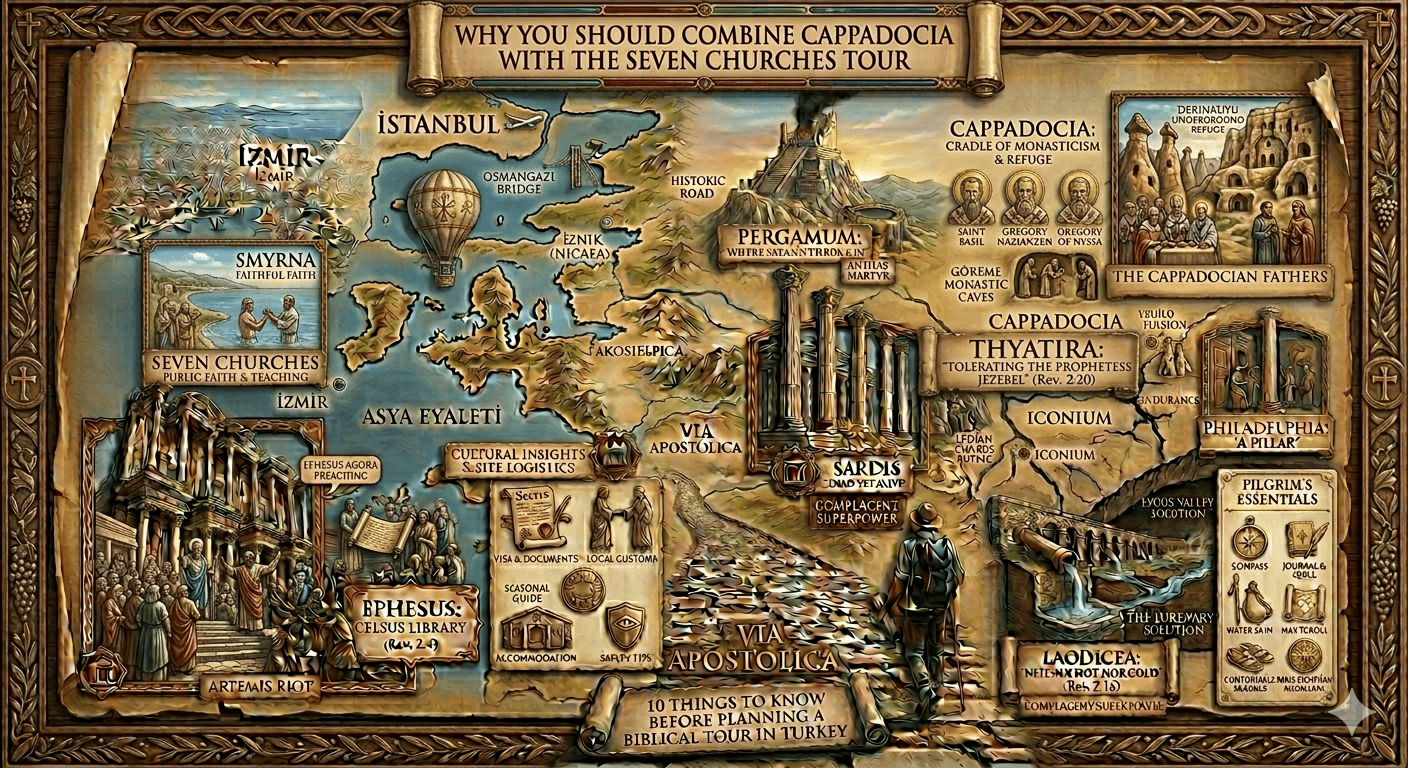
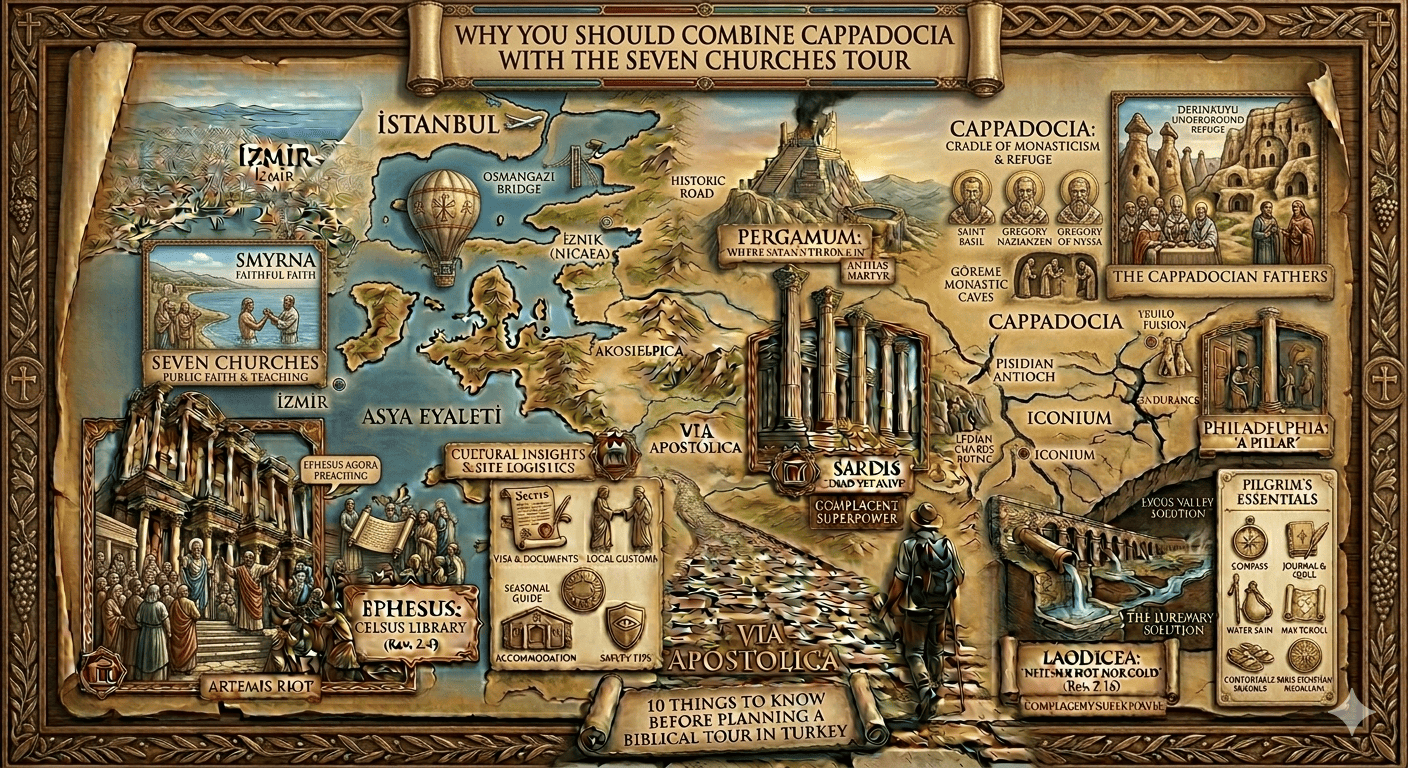
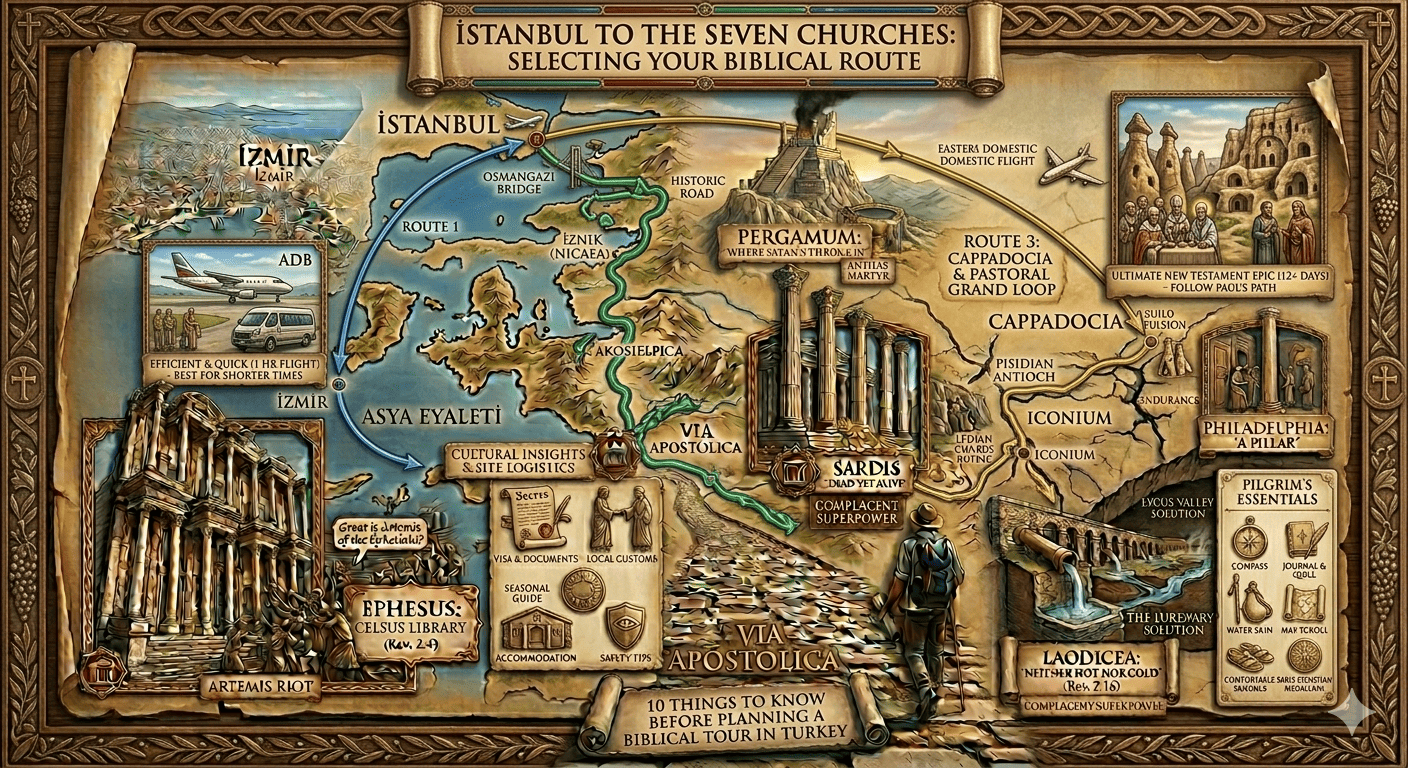
For many faith travelers, the Holy Land of Israel is the first place that comes to mind when thinking of biblical history. However, to truly understand the expansion of the early Church, the journeys of the Apostles, and the deep theological roots of the New Testament, one must look to modern-day Turkey.
Historically known as Asia Minor, this land is the stage for nearly two-thirds of the New Testament. It is where the Apostle Paul spent his missionary journeys, where early Church Councils shaped Christian doctrine, and where the Apostle John received his apocalyptic visions.
Embarking on a pilgrimage here is a profoundly moving experience, but it requires careful preparation. To help you transform your spiritual pilgrimage into a seamless and unforgettable journey, here are 10 essential things to know before planning your biblical tour in Turkey.
1. Turkey is the "Other Holy Land"
Many first-time visitors are astonished to discover just how much biblical history is anchored in Turkey. This is not just a collection of casual ruins; it is the cradle of early Christianity. Abraham lived in Harran; Antioch (Antakya) is where believers were first called “Christians”; Ephesus was the spiritual home of the Virgin Mary and Apostle John; and all Seven Churches of the Book of Revelation are located within Western Anatolia. Approaching Turkey with the mindset of a true pilgrimage will completely change how you view the landscapes.
2. The Ideal Seasons: Spring and Autumn
While Turkey is a year-round destination, timing is everything for an archaeological faith tour.
Spring (April to June): The valleys are lush, the weather is mild, and wildflowers bloom among the ancient marbles of Ephesus and Hierapolis.
Autumn (September to November): The summer crowds have dissipated, the Mediterranean air is crisp, and the temperatures are perfect for long days of walking through open-air archaeological parks.
Tip: July and August can be intensely hot, especially when walking through unshaded stone ruins like Sardis or Pergamum.
3. Pack for Extensive Walking (and Ancient Terrain)
A biblical tour is highly active. You won’t just be looking at ruins from a tour bus; you will be walking along original 2,000-year-old Roman roads, climbing the exceptionally steep stone steps of the Pergamum theater, and exploring uneven dirt paths in the Lycus Valley. Invest in high-quality, broken-in walking shoes with excellent grip.
4. Dress Codes for Sacred and Cultural Sites
Turkey is a secular state with a predominantly Muslim population, and cultural respect is key. While casual clothing (shorts and t-shirts) is entirely acceptable at major archaeological ruins like Ephesus, visiting functioning mosques or certain traditional areas requires modest dress. Women should carry a light scarf in their daypack to cover their head and shoulders if entering a mosque, and both men and women should ensure their knees and shoulders are covered in sacred spaces.
5. Seamless Logistics: The Value of a Private Chauffeur
The biblical sites of Turkey are spread across vast distances. While Ephesus and Smyrna are near the coast, driving inland to sites like Philadelphia, Laodicea, or the fairy chimneys of Cappadocia involves navigating expansive highways and winding valley roads. Opting for a private, chauffeur-driven minibus or a curated private tour eliminates the stress of driving in a foreign country, finding parking, and navigating local traffic, leaving you free to focus entirely on the spiritual and educational aspects of your pilgrimage.
6. You Need a Valid E-Visa
Before booking your flights, check the passport and visa requirements for your nationality. Most international travelers (including US, Canadian, and many European citizens) can easily obtain an electronic visa (e-Visa) online via the official government portal prior to arrival. Ensure your passport has at least six months of validity remaining from your date of entry.
7. Museums Pass: The Smart Way to Explore
If you are planning to visit multiple biblical sites—such as the Acropolis of Pergamum, the Celsus Library in Ephesus, and the stunning terraces of Pamukkale (Hierapolis)—purchasing a regional or nationwide Museum Pass (Müzekart) is highly recommended. It not only saves a significant amount on individual entry fees but also allows you to bypass long ticket lines at the gates.
8. Biblical Literacy Enhances the Experience
To get the absolute most out of your journey, do a little spiritual homework before you fly. Reread the Book of Acts (chapters 13-20), Paul’s letters to the Ephesians and Colossians, and Revelation chapters 1-3. When you stand in the marketplace of a city where Paul actually preached, or look at the cold water aqueducts of Laodicea, the scripture will instantly leap off the page in vibrant, three-dimensional reality.
9. Turkish Hospitality and Culinary Delights
Beyond the ancient history, the warm hospitality of the Turkish people will be a highlight of your journey. Turkish culture values guests deeply. You will frequently be offered cups of hot Turkish tea (çay) by local shopkeepers. Furthermore, the cuisine is spectacular, fresh, and deeply connected to biblical times—featuring olives, figs, pomegranates, fresh unleavened breads, and locally caught fish reminiscent of ancient Mediterranean banquets.
10. Partner with a Specialized Faith Tour Specialist
The most crucial element of a successful pilgrimage is your guide. A standard commercial tour guide might show you the architecture of a site, but a specialized Biblical Tour Agency understands the theological framework. You need an expert who can connect the archaeological stones to the verses of the Bible, point out hidden Christian graffiti in ancient crypts, and understand the deep spiritual gravity that a Catholic or faith-based group seeks during mass or reflection times.
Are you ready to plan your definitive pilgrimage to the Cradle of the Church? Explore our custom-tailored [Biblical Tours of Turkey] or contact our expert team today to design a seamless, private itinerary that brings the New Testament to life.