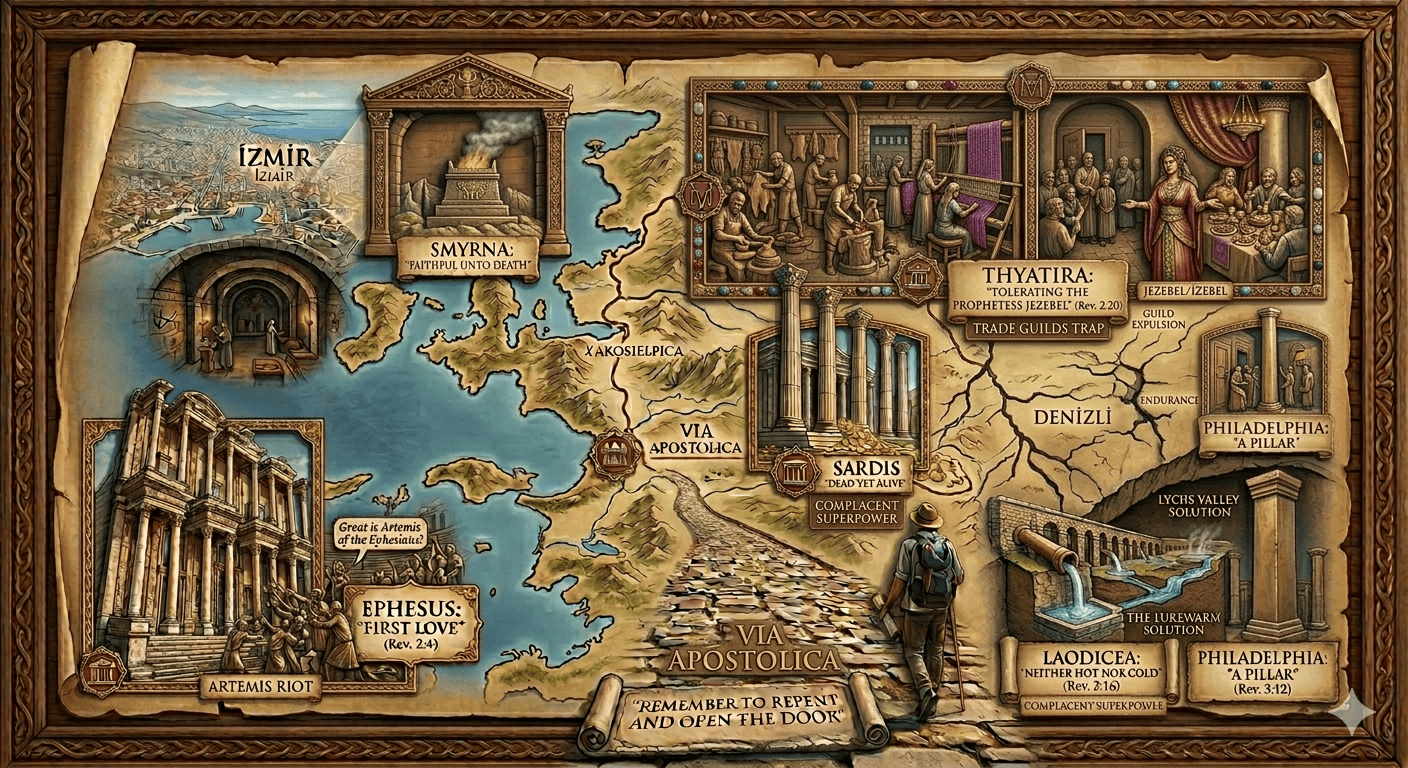
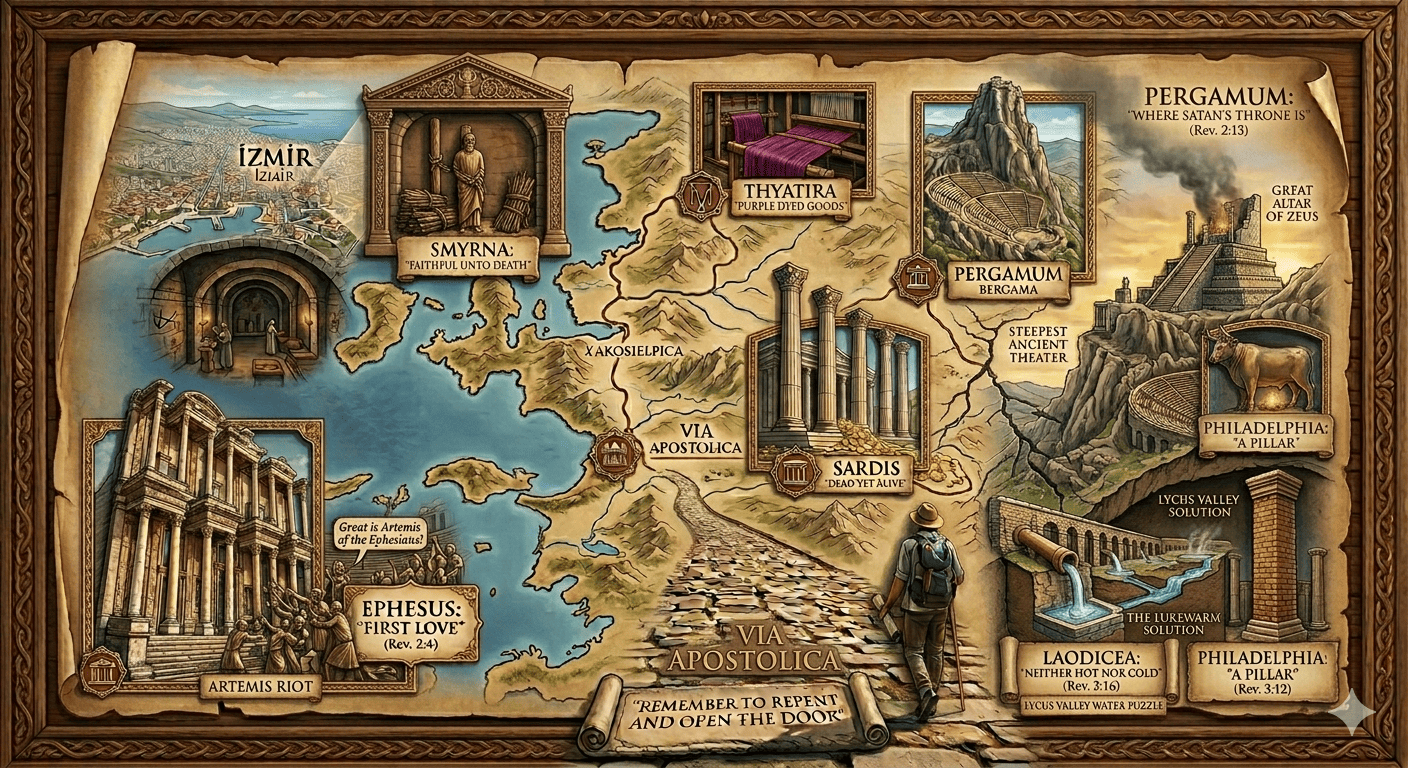
If you were to visit the ancient city of Laodicea in the middle of the first century, you would find yourself in a hub of absolute self-sufficiency. Located in the fertile Lycus River Valley—near modern-day Denizli—Laodicea was a booming financial superpower. It was a city so fabulously wealthy that when a catastrophic earthquake leveled it in 60 AD, its citizens proudly refused imperial financial aid from Rome, declaring they had enough riches to rebuild it entirely on their own.
Laodicea had it all: thriving banking houses, a world-renowned medical school that produced a famous healing eye salve, and a lucrative textile industry that exported a glossy, luxurious black wool across the Roman Empire.
Yet, despite its glittering economic success and structural grandeur, the risen Christ sent this community the most scathing, chilling letter in the entire Book of Revelation. He offered them not a single word of praise. Instead, using the city’s own local infrastructure and industries as a devastating spiritual mirror, He diagnosed them with a unique spiritual condition: they were “lukewarm.”
The Geography of a Metaphor: Hot, Cold, and Lukewarm
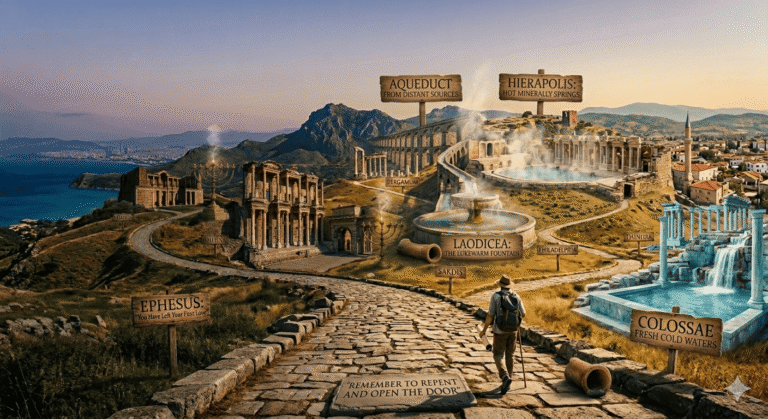
To truly understand what it means to be a “lukewarm” church, we have to look at Laodicea’s water system. Unlike its neighboring cities, Laodicea had a major environmental flaw: it had no natural water source.
Hierapolis (modern-day Pamukkale), just a few miles to the north, was famous for its burning hot, mineral-rich thermal springs, celebrated for their medicinal and healing properties.
Colossae, located to the east, was blessed with rushing mountain streams that provided crisp, cold, refreshingly pure drinking water.
Laodicea, however, had to pipe its water in from distant hot springs through a complex system of stone aqueducts. By the time the water traveled across the valley and reached the city walls, it was no longer healingly hot, nor was it refreshingly cold. It was a stagnant, mineral-heavy, nauseatingly lukewarm sludge. If a traveler took a drink of it, their immediate, involuntary reaction was to spit it out.
Christ uses this exact local reality to confront the church in Revelation 3:15-16: “I know your deeds, that you are neither cold nor hot. I wish you were either one or the other! So, because you are lukewarm—neither hot nor cold—I am about to spit you out of my mouth.”
Being “lukewarm” was not a call to find a middle ground; it was a diagnosis of spiritual uselessness. They were neither brings of refreshment (like cold water) nor brings of healing (like hot water). They had become spiritually stagnant.
The Illusion of Self-Sufficiency
The tragedy of the Laodicean church was their profound blindness, driven by their material success. They mistook financial prosperity for divine approval. Christ exposes this delusion in verse 17:
“You say, ‘I am rich; I have acquired wealth and do not need a thing.’ But you do not realize that you are wretched, pitiful, poor, blind and naked.”
In three sharp strokes, Christ dismantles the very pillars of Laodicean pride:
Their Banks: They thought they were rich, but spiritually they were bankrupt.
Their Eye Salve: They excelled in ophthalmology, but they were spiritually blind to their own decay.
Their Black Wool: They clothed the empire in luxury, but in the eyes of God, they stood spiritually naked.
He counsels them to buy from Him gold refined in the fire (true faith), white clothes to wear (righteousness), and salve to put on their eyes so they can finally see.
Walking Through Laodicea Today: The Meticulous Restoration
For centuries, Laodicea lay as an expansive, wind-swept field of rubble. However, over the last two decades, extensive and brilliant archaeological excavations have transformed it into one of the most spectacularly restored ancient cities in Turkey.
As you step onto the ancient site today, located just a short distance from the gleaming white travertine terraces of Pamukkale, the scale of Laodicea’s past wealth becomes undeniably clear. You can walk down the massive, column-lined Syria Street, marvel at the remnants of two grand theaters, and trace the foundations of its monumental fountains.
Most fascinatingly for biblical pilgrims, archaeologists have uncovered and beautifully partially restored an expansive 4th-century church complex, built shortly after the Emperor Constantine legalized Christianity. Walking among its grand pillars and intricate mosaics, you can still see the embedded ancient clay pipes heavily lined with thick calcium carbonate deposits—the tangible, physical evidence of the hard, mineral-heavy, lukewarm water that defined the city’s life and inspired the apocalyptic letter.
Knocking at the Door
Despite the severity of the rebuke, the letter to Laodicea ends with one of the most tender, intimate invitations in all of Scripture: “Here I am! I stand at the door and knock. If anyone hears my voice and opens the door, I will come in and eat with that person, and they with me.” (Revelation 3:20).
This verse is often used for individual evangelism, but contextually, it was written to a church. Christ was on the outside of His own church, knocking to get back in. The stones of Laodicea stand today as a timeless warning to every modern traveler and faith community: the greatest danger to faith is not violent persecution from the outside, but the comfortable, self-satisfied lukewarmness that pushes Christ out from the inside.
Are you ready to witness the profound intersections of prophecy, geography, and archaeology? Explore our signature [Seven Churches of Revelation Itineraries] or connect with us to build a custom pilgrimage to Laodicea and the Lycus Valley today.