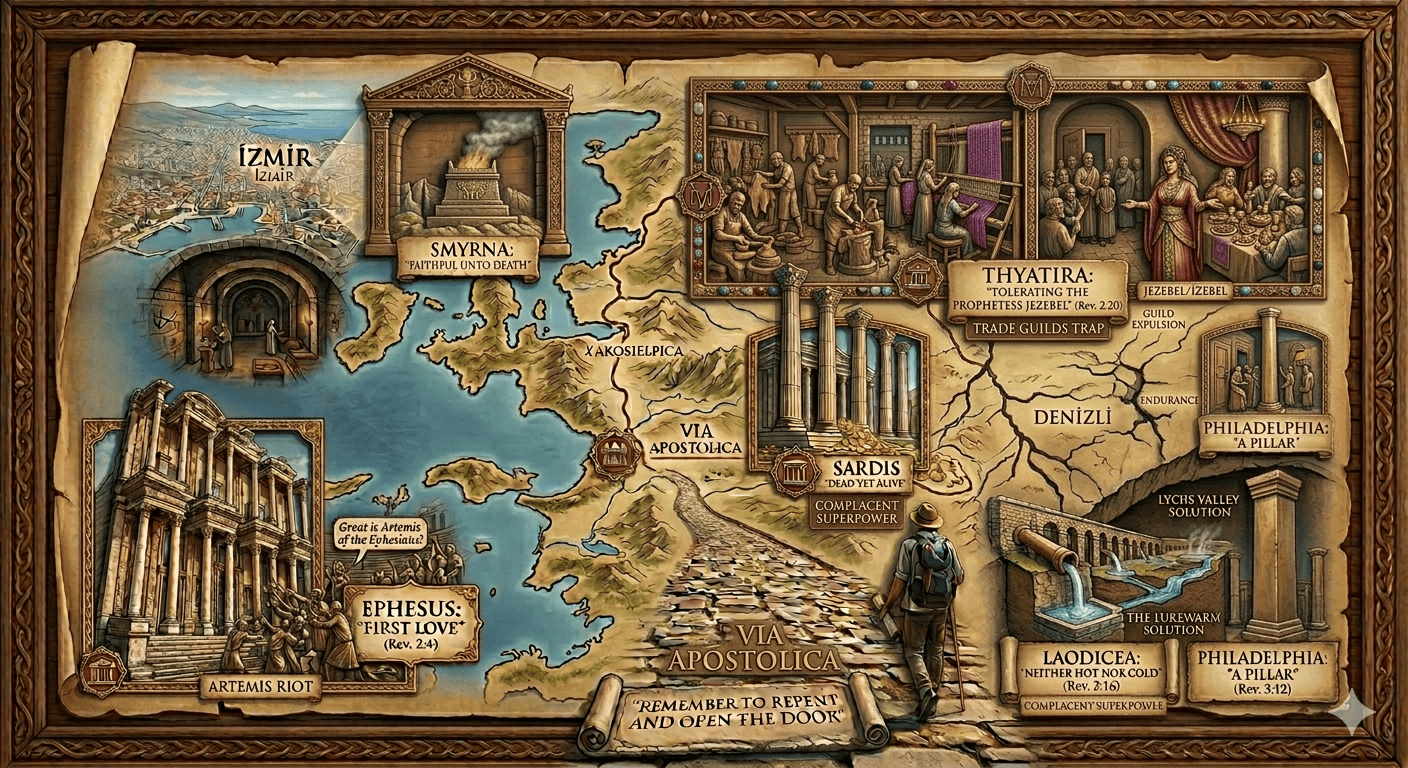
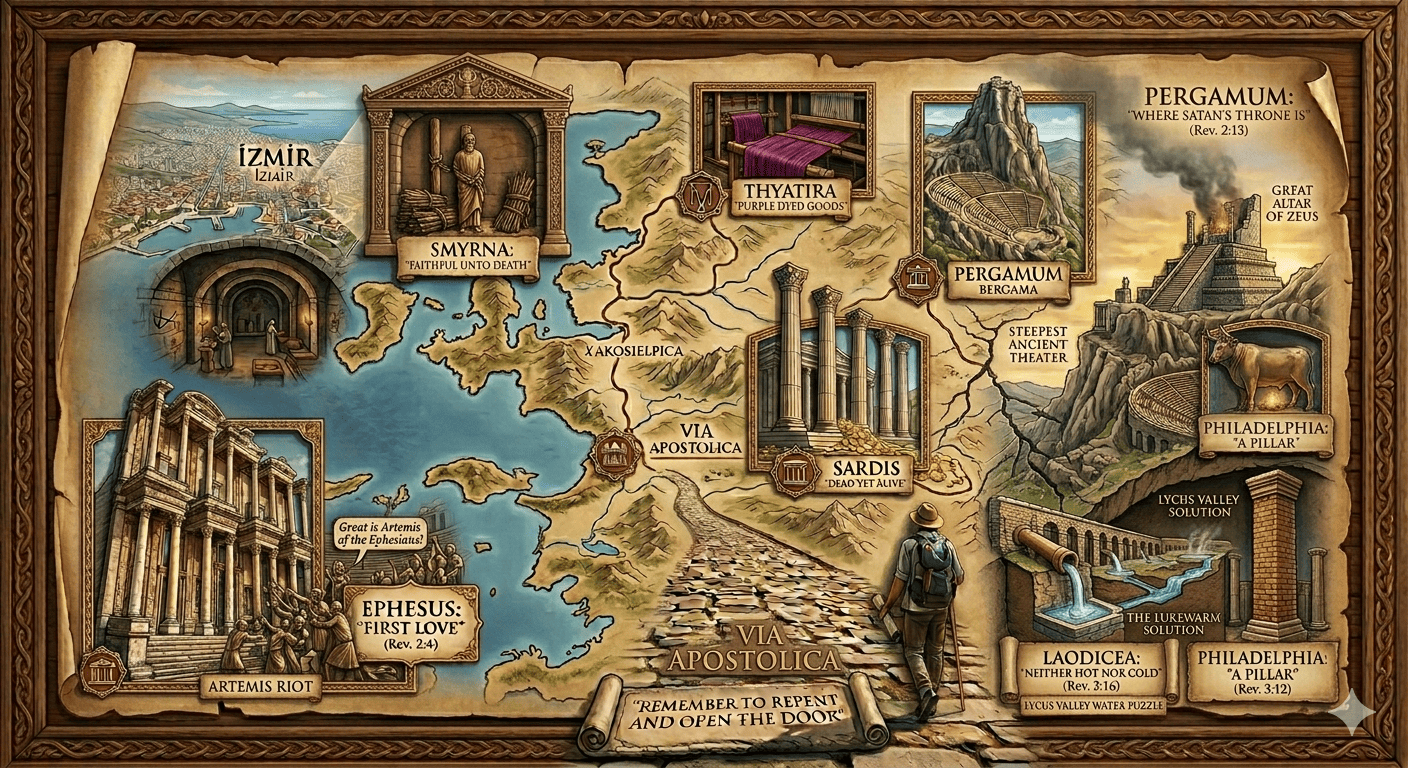
To step into the heart of modern-day İzmir is to experience a bustling, cosmopolitan Aegean metropolis where modern high-rises overlook a sweeping bay and historic bazaars hum with life. But beneath this vibrant Turkish city lies a deeply sacred and dramatic Christian history.
In the first century, this city was known as Smyrna, celebrated as the “First of Asia” in beauty and size. It was a fiercely loyal ally of Rome, boasting magnificent temples, a world-famous medical library, and a massive theater carved into Mount Pagos.
Yet, while the Roman elite enjoyed lives of absolute luxury in this coastal paradise, Smyrna was also home to a fragile, severely marginalized community of early believers. Under the shadow of Smyrna’s imposing imperial temples, these Christians faced a daily crucible of economic exclusion, public slander, and violent persecution.
To this suffering community, the risen Christ sent a letter in the Book of Revelation containing no condemnation, no warnings, and no rebukes—only a message of pure, tender comfort and an ultimate promise: “Be faithful, even to the point of death, and I will give you the crown of life.”
The Crucible of Smyrna: Why the Believers Suffered
To understand the intense pressure faced by the Christians of Smyrna, one must understand the city’s relationship with Rome. In 195 BC, Smyrna became the very first city in Asia Minor to build a temple to Dea Roma (the goddess of Rome). Later, in 26 AD, Smyrna won a highly competitive bid over Ephesus to build a temple dedicated to the Emperor Tiberius.
Smyrna was a hotbed of imperial devotion. Participating in the civic life and economic guilds of Smyrna required a yearly pinch of incense on pagan altars, declaring “Caesar is Lord.”
For the early Christians, who could confess only “Jesus is Lord,” this refusal meant immediate social exile. They were locked out of trade guilds, their businesses were boycotted, and their homes were often plundered. This explains Christ’s opening words to them in Revelation 2:9: “I know your afflictions and your poverty—yet you are rich!”
While they were materially destitute by Roman standards, they possessed a spiritual opulence that the golden temples of Smyrna could never buy.
Polycarp of Smyrna: Faithful Unto Death
No historical figure embodies the spirit of the Smyrnaean church more powerfully than Polycarp. Born around 69 AD, Polycarp was not just any early bishop; he was personally discipled by the Apostle John himself, serving as a vital living link to the apostolic era.
As an old man of eighty-six, Polycarp was targeted during a wave of anti-Christian persecution around 155 AD. Refusing to flee, he was captured and brought into Smyrna’s packed stadium, where the proconsul pleaded with him to curse Christ and swear by the genius of Caesar to save his life.
Polycarp’s response, recorded in the ancient letter The Martyrdom of Polycarp, remains one of the most sublime confessions of faith in human history:
“Eighty and six years have I served Him, and He hath done me no wrong. How then can I blaspheme my King and Savior?”
When threatened with wild beasts and fire, Polycarp stood unshaken. According to eye-witness accounts, when the executioners went to nail him to the stake, he asked to be merely tied, stating that the God who gave him strength to endure the fire would keep him still. As the flames rose, they formed an arch around his body without burning him, leading a soldier to ultimately pierce him with a dagger.
Polycarp died exactly as Christ had commanded decades prior in the letter to Smyrna: faithful unto death.
Walking Through Smyrna Today: The Sacred Stones of İzmir
Smyrna is unique among the Seven Cities. Unlike Ephesus, Sardis, or Laodicea, which eventually became silent ruins, Smyrna was never abandoned. It evolved, grew, and became modern İzmir.
Yet, right in the beating heart of this modern city, the past stands remarkably preserved:
The Ancient Agora of Smyrna: Located in the Konak district, this is one of the most magnificent surviving Roman agoras in the world. As you walk through its massive courtyard, you can descend into the vast, vaulted subterranean chambers (the cryptoporticus). Walking these cool, dark hallways, you are standing on the exact cobblestones where early Christians shopkeepers and laborers once gathered, worked, and held fast to their faith. Archaeologists have even found ancient charcoal graffiti on these walls, depicting early Christian symbols and prayers.
The St. Polycarp Church: Located in the Alsancak neighborhood, this beautiful historic church is the oldest functioning Christian temple in İzmir. Built in the 17th century and heavily restored over the centuries, its interior is covered in breathtaking frescoes painted by the French artist Raymond Charles Péré. The vivid paintings depict scenes from the life and martyrdom of Polycarp, offering a quiet, deeply spiritual sanctuary of reflection amid the roar of the modern city.
Smyrna is unique among the Seven Cities. Unlike Ephesus, Sardis, or Laodicea, which eventually became silent ruins, Smyrna was never abandoned. It evolved, grew, and became modern İzmir.
Yet, right in the beating heart of this modern city, the past stands remarkably preserved:
The Ancient Agora of Smyrna: Located in the Konak district, this is one of the most magnificent surviving Roman agoras in the world. As you walk through its massive courtyard, you can descend into the vast, vaulted subterranean chambers (the cryptoporticus). Walking these cool, dark hallways, you are standing on the exact cobblestones where early Christians shopkeepers and laborers once gathered, worked, and held fast to their faith. Archaeologists have even found ancient charcoal graffiti on these walls, depicting early Christian symbols and prayers.
The St. Polycarp Church: Located in the Alsancak neighborhood, this beautiful historic church is the oldest functioning Christian temple in İzmir. Built in the 17th century and heavily restored over the centuries, its interior is covered in breathtaking frescoes painted by the French artist Raymond Charles Péré. The vivid paintings depict scenes from the life and martyrdom of Polycarp, offering a quiet, deeply spiritual sanctuary of reflection amid the roar of the modern city.
The Crown of Smyrna
Smyrna was a city famous for its physical crown—the circle of magnificent public buildings and temples that sat atop Mount Pagos, looking like a crown of stone from the sea.
But Christ offered the believers a far superior crown: the Stephanos (the victor’s laurel wreath) of eternal life. The stones of Mount Pagos have long since crumbled and changed, but the legacy of Smyrna’s faithfulness remains unbroken.
To visit İzmir today is not just to see ancient ruins; it is to witness the birthplace of a resilient, triumphant faith that conquered the might of the Roman Empire through nothing more than unwavering love and endurance.
Are you ready to stand in the Agora of Smyrna and reflect on the legacy of Polycarp? Explore our curated [Seven Churches of Revelation Itineraries] or contact us to design a custom spiritual pilgrimage to İzmir today.